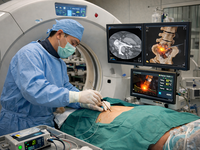
Background: Artificial intelligence (AI) has reached expert-level performance across many areas of medical imaging, yet this progress has not translated proportionally into improvements in patient outcomes. While deep learning models excel at pixel-level pattern recognition, their impact on clinical decision-making, workflow efficiency, and patient-centered care remains poorly characterized Objective: This structured narrative review synthesizes evidence from high-quality studies (2018–2025) to evaluate whether imaging AI systems meaningfully improve patient outcomes beyond diagnostic accuracy. The review critically examines clinical integration, workflow implications, ethical considerations, and the persistent gap between algorithmic performance and patient-centered benefit. Methods: A structured search of PubMed, Scopus, IEEE Xplore, and Web of Science (2018–October 2025) identified empirical studies applying AI to human medical imaging and reporting both diagnostic metrics and real-world clinical, workflow, or patient-centered outcomes. Studies were screened independently by two reviewers, and data were extracted using predefined categories : model type, dataset characteristics, validation strategy, performance metrics, workflow impact, patient outcomes, and ethical considerations. Results: Ten high-quality studies met the inclusion criteria. Across domains (ophthalmology, mammography, echocardiography, CT, PET/CT, and chest radiography), AI models achieved strong diagnostic performance (pooled mean AUC = 0.91 ± 0.03). However, only 30% of studies reported measurable patient impact and 20% reported workflow improvements. External validation often revealed 5–10% performance degradation, and only four systems were deployed in routine care. Ethical analyses showed emerging concerns regarding bias, explainability, and trustworthiness particularly related to racial inference from imaging data. Conclusions: Medical imaging AI has matured algorithmically but remains clinically immature. Achieving true patient-centered benefit requires shifting from model-centric development to systems-level innovation: multimodal integration, explainable AI, human-in-the-loop designs, equity-aware training, and prospective clinical evaluation. AI will advance from “seeing the organ” to “understanding the patient” only when technical performance aligns with clinical workflows, ethical oversight, and human experience.